
Everything Executives Need to Know About GEO in 2026
About this translation
Original publication dates and historical context are preserved. Images, embedded media, source documents and code examples remain in their original language.
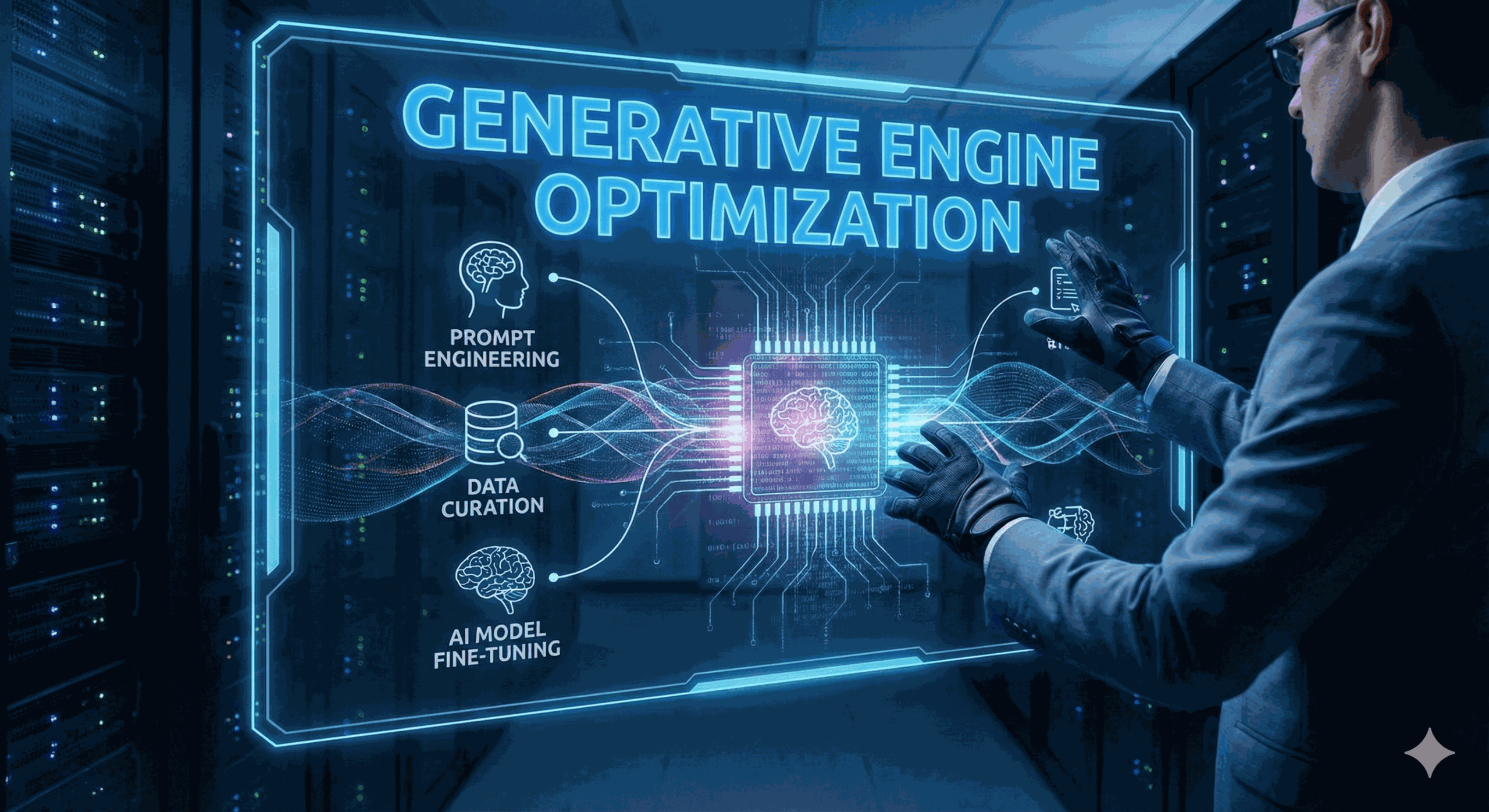
Currently, Generative Engine Optimization (GEO) represents a fundamental transformation in how brands and organizations must optimize their digital presence. Unlike traditional SEO, which optimizes for appearing in Google search results, GEO optimizes content to be cited by generative AI engines such as ChatGPT, Perplexity, Gemini, and Claude.
The concept was formally introduced by Princeton University researchers in November 2023, and during 2025 it has seen accelerated adoption driven by exponential growth in referral traffic from AI platforms.
Key data from 2025:
- AI referral traffic grew 527% between January and May 2025
- ChatGPT dominates with ~65-78% of global AI traffic
- AI platforms currently account for 0.15% of global traffic (vs. 48.5% from traditional organic search)
- Google still sends 345 times more traffic than all AI platforms combined
- Currently, 47% of brands still do not have a deliberate GEO strategy
1. What Is GEO?
Definition
Generative Engine Optimization is the practice of structuring and optimizing digital content to maximize its likelihood of being cited as a source in answers generated by AI platforms.
Fundamental Differences from SEO
| Aspect | Traditional SEO | GEO |
|---|---|---|
| Objective | SERP rankings | Citations in AI answers |
| Source of visibility | Blue links (10+) | 2–7 domains cited per answer |
| Key factors | Backlinks, keywords, speed | Citation authority, structured data |
| User intent | Rigid keywords | Conversational queries |
| Primary metric | Organic position | Visibility score / Citation share |
Ecosystem of Related Terms
- GEO (Generative Engine Optimization): Optimization for generative engines
- AEO (Answer Engine Optimization): Optimization for answer engines
- LLMO (Large Language Model Optimization): Optimization for LLMs
- AI SEO: Colloquial term for the combined practices
2. The AI Search Market in 2025
AI Chatbot Market Share (December 2025)
| Platform | Global Share | Trend |
|---|---|---|
| ChatGPT | 64.5-68% | Declining (−22 pp annually) |
| Google Gemini | 18-21.5% | Growing (+388% annually) |
| DeepSeek | 3.7% | Stable |
| Grok (xAI) | 3.4% | Growing |
| Perplexity | 2.0-8.2% | Fluctuating |
| Claude | 0.9-2% | Growing |
Volume and Growth
- ChatGPT: ~810 million monthly active users, 2.5 billion prompts daily
- Perplexity: 780 million monthly queries (vs. 230M in mid-2024, +239%)
- Gemini: 346 million monthly active users (+30% recently)
Citation Patterns by Platform
ChatGPT:
- Wikipedia: ~48% of citations
- Reddit: ~11%
- Favors encyclopedic content and established sources
Perplexity:
- Prioritizes real-time information
- Performs better in developed markets (19.73% share in the United States)
- Values community examples and content freshness
Google AI Overviews:
- Appear in 20% of Google searches
- Currently, 76.1% of citations also rank in Google's Top 10
- Prioritizes content already ranking organically
3. Research-Validated GEO Tactics
Findings from the Princeton/Georgia Tech Study
The most effective methods for increasing visibility in generative engines:
| Tactic | Visibility Improvement | Best for |
|---|---|---|
| Statistics Addition | +30-40% | Law, Government, Opinion |
| Quotation Addition | +30-40% | History, Society, Explanations |
| Cite Sources | +30–40% (up to +115% for rank-5 sites) | All content types |
| Fluency Optimization | +25-30% | All content types |
| Keyword Stuffing | NEGATIVE performance | ❌ Not recommended |
The optimal combination (Fluency Optimization + Statistics Addition) outperforms any individual tactic by more than 5.5%.
Universal Optimization Principles
1. Content structure:
- Direct answer within the first 40–60 words
- Short paragraphs of 60–100 words
- Sentences of no more than 15–20 words
- Statistics every 150–200 words
2. Credibility and authority:
- Include attributed expert quotes
- Cite authoritative sources (journals, government, education)
- Demonstrate E-E-A-T (Experience, Expertise, Authoritativeness, Trustworthiness)
- Transparent author biographies
3. Technical structure:
- Schema markup (JSON-LD)
- Clear hierarchical headings
- Lists and comparison tables
- Clean, descriptive URLs
4. Freshness:
- Timestamped content
- Regular updates with visible dates
- Priority for recent information (AI prefers content that is 25.7% fresher)
4. Strategies by Content Type
Comparison Articles (32.5% of Citations)
- Lead in citation likelihood
- Feature-by-feature comparison tables
- Transparent methodology
Product Pages
- Clear, structured specifications
- FAQs with schema
- Specific use cases
Technical Documentation
- Direct answers to common questions
- Commented code examples
- Scannable structure
Original Research
- Primary data and unique statistics
- Explained methodology
- Citable charts and visualizations
5. GEO Technical Factors
Schema Markup
Content with appropriate schema shows 30–40% greater visibility in AI answers.
Priority types:
- FAQ Schema
- HowTo Schema
- Article/NewsArticle Schema
- Organization Schema
- Product Schema
Crawler Accessibility
- Up-to-date XML sitemap
- Correctly configured robots.txt
- Optimized Core Web Vitals
- Mobile-first design
Domains and Trust Signals
Analysis of 30 million citations (Profound, June 2025):
- 80%+ of citations come from .com domains
- ~11% from .org domains (mainly Wikipedia)
- Only ~3.5% from country-specific domains
6. Metrics and Measurement
Main GEO KPIs
1. Brand Mention Count:
- Monthly manual monitoring of 10–15 relevant queries
- Tracking in ChatGPT, Perplexity, and Gemini
2. Citation Share:
- Percentage of answers where the brand appears versus competitors
- Tools: Profound, Semrush AI Toolkit
3. AI Referral Traffic:
- Configure GA4 to track traffic from:
- chat.openai.com
- perplexity.ai
- gemini.google.com
- claude.ai
4. Citation Quality:
- Mention context (positive/neutral/negative)
- Position within the answer
- Correct attribution of information
Measurement Tools
| Tool | Function | Price |
|---|---|---|
| Profound | AI citation analytics | Enterprise |
| Semrush AI Toolkit | Visibility in ChatGPT | $99–500/month |
| Writesonic GEO Monitor | Mention monitoring | Variable |
| SE Ranking ChatGPT Tracker | Visibility tracking | Included in plans |
7. The Relationship Between SEO and GEO
Interdependence
- Currently, 76.1% of content cited in AI Overviews also ranks in Google's Top 10
- Strong SEO = foundation for effective GEO
- GEO complements SEO; it does not replace it
Integrated Priorities
- Maintain solid SEO fundamentals
- Add a GEO optimization layer
- Ensure presence in high-ranking lists/comparisons
- Build authority through third-party mentions
Results Timeline
- Traditional SEO: 3–6 months for results
- GEO: 2–4 weeks for initial visibility (models update more frequently)
- Sustained authority: 6+ months to build a durable position
8. Trends and the Future
2026 Projections
- AI traffic is projected to reach 14.5% of the total within 12 months
- Greater fragmentation of the chatbot market
- Deeper AI integration into search workflows
- Potential regulations on citations and attribution
Signs of Change
- ChatGPT rapidly losing market share
- Gemini growing aggressively through the Google/Android ecosystem
- New entrants (Grok, DeepSeek) gaining traction
- Platforms specializing by use case
Risks and Considerations
- GEO Spam: Similar to SEO spam in the 2000s, manipulative practices are already appearing
- English-language bias: English content dominates global citations
- Source concentration: A few sites (Wikipedia, Reddit, Forbes) dominate citations
- Algorithm volatility: Models update frequently
9. Recommended Implementation Plan
Phase 1: Audit (Weeks 1–2)
- Map current presence in AI answers
- Identify gaps versus competitors
- Audit the current technical structure
Phase 2: Foundations (Weeks 3–6)
- Implement priority schema markup
- Restructure key content (first 60 words, statistics)
- Optimize existing FAQs
Phase 3: Content (Weeks 7–12)
- Create/update comparison articles
- Add expert quotes and sources
- Publish original research with unique data
Phase 4: Authority (Ongoing)
- Guest posts on high-authority sites
- Digital PR for third-party mentions
- Continuous content updates
10. Conclusions
- GEO is now: Although AI traffic is still small (0.15%), growth is exponential, and the window of opportunity for early movers is now.
- It does not replace SEO: GEO complements and builds on solid SEO foundations.
- Quality over quantity: Manipulative tactics (keyword stuffing) perform negatively. Truly useful, structured, authoritative content wins.
- New metrics: Citation share and AI visibility are becoming critical KPIs alongside traditional rankings.
- Market fragmentation: Optimizing for multiple platforms (ChatGPT, Perplexity, Gemini) requires understanding their distinct preferences.
- Data and citations win: Statistics, expert quotes, and authoritative sources are the highest-impact factors according to research.
References
- Princeton University & Georgia Tech: “GEO: Generative Engine Optimization” (2023)
- Previsible 2025 AI Traffic Report
- Profound AI Citation Analysis (30M citations, June 2025)
- SE Ranking AI Traffic Research Study (September 2025)
- First Page Sage GEO Strategy Guide (October 2025)
- SimilarWeb Global AI Tracker (December 2025)
- GEO Conference 2025 (Austin, Texas)