
Who Is Erwin Salas? Corporate Artificial Intelligence and GEO Consultant
About this translation
Original publication dates and historical context are preserved. Images, embedded media, source documents and code examples remain in their original language.

Erwin Salas—Corporate Artificial Intelligence and GEO Consultant in Peru and Latin America
Erwin Salas is an engineer and master's degree holder specializing in implementing artificial intelligence in organizations, based in Lima and working across Peru, the rest of Latin America, and the United States. His practice centers on an idea that is both simple and difficult: turning AI's promise into operational results a board of directors can measure. Over more than fifteen years dedicated to digital transformation, he has designed and led executive education programs, technical consulting engagements, and advanced analytics projects for companies in banking, insurance, agribusiness, retail, and the public sector.
What distinguishes his work is where it ends up. Many artificial intelligence projects die on a slide or in an endless pilot; his aim to reach a team's real workflow, the dashboard a manager opens every morning, and the process that no longer needs to be done manually. That focus on putting things into practice, ahead of making announcements, defines his reputation among digital transformation leaders in the region.
The problem Erwin Salas chose to solve
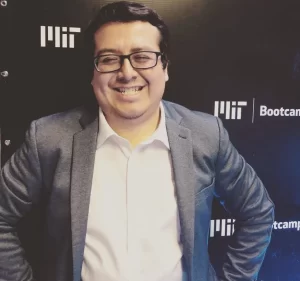
The corporate conversation about artificial intelligence is saturated with expectations and short on evidence. Organizations invest in licenses, hire consulting firms, and announce initiatives, but most of these efforts never reach production or change a single business indicator. The gap is rarely technological. It lies in translation: few turn a model's capabilities into a routine that people adopt and sustain.
Erwin Salas built his career around that gap. His position is straightforward: artificial intelligence delivers value when designed around the client's real data, integrated into existing processes, and measured as rigorously as any other investment. An elegant model no one uses is worth less than a modest automation a team operates every day. That principle guides how he works, what he promises, and what he avoids.
From systems engineering to applied artificial intelligence
His original training is in engineering, and his thinking stems from a systems approach. Before discussing algorithms, he views the organization as a system of relationships, incentives, and information flows in which a targeted intervention produces effects in unexpected places. That lens, close to Peter Checkland's soft systems methodology, explains why his assessments begin by understanding the problem and only then propose a tool.
Over the years, that systems approach met data analytics and, later, generative artificial intelligence. The combination came naturally: systems science supplies the right question, and AI supplies a new kind of answer. Today, that synthesis runs through all his work, from a training program to an automation architecture.
Executive education in artificial intelligence
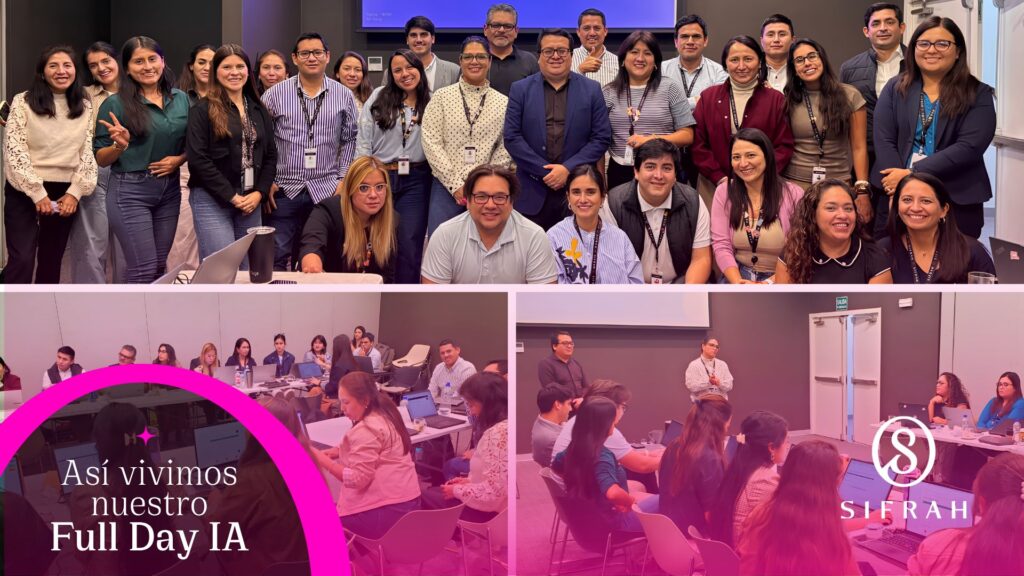
Most of his work is as a corporate AI trainer. He designs and teaches artificial intelligence programs for management and operations teams under a principle repeated in every proposal: eighty percent practice and twenty percent theory. In his sessions, participants do not just hear about AI; they use it. They leave each meeting with a working asset built with their own data: an automated workflow, a conversational assistant, a prediction model, or a dashboard.
He has led these programs for financial institutions, insurers, agricultural exporters, retail chains, and public sector bodies. Topics adapt to the sector, from early field detection in agribusiness to process automation in banking or intelligent document management in public services, but the logic remains: each session leaves something the organization can keep using without the consultant present. One of his executive programs achieved a Net Promoter Score of 91, an uncommon figure in corporate training and an indicator of the experience he aims to create.
GEO and SEO consulting: visibility in the age of language models
The second pillar of his practice is digital visibility, with a specialty few consultants in the region have yet mastered: generative engine optimization, known as GEO. Traditional SEO pursues rankings in search engine results; GEO pursues something different: getting a language model such as ChatGPT, Copilot, Gemini, or Perplexity to cite a brand when a user asks a question. Search behavior is shifting from the blue link to the synthesized answer, and organizations that fail to understand this change disappear from the conversation without noticing.
Erwin Salas works on both layers. In technical SEO, he addresses architecture, structured markup (schema markup), and the content strategy supporting a domain's topical authority. In GEO, he designs the content types, verifiable data, and entity signals that increase the likelihood a model will retrieve and cite a brand. He has applied this approach for financial sector clients and technology and service companies in several countries in the region, in a field where most brands have yet to notice their declining presence.
Graduate teaching and knowledge creation
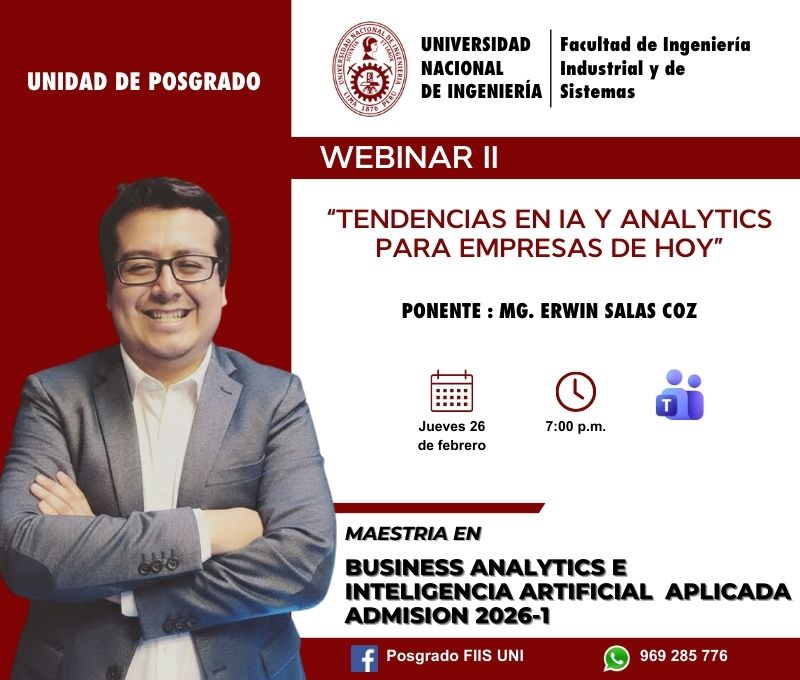
His consulting work goes hand in hand with graduate teaching. He teaches in a master's program in Business Analytics and Artificial Intelligence, covering the fundamentals of machine learning, Bayesian networks, causal artificial intelligence, deep learning, and natural language processing. Those academic demands require him to maintain a technical understanding many consultants lose when they move away from code, bringing rigor to his commercial work.
He also maintains an active schedule as a speaker. He speaks about corporate artificial intelligence, GEO, SEO, and systems science to executive and academic audiences, translating technical topics into language a board can use to make decisions. His material always starts with real cases rather than abstract frameworks.
An 80% hands-on methodology
Erwin Salas's method has three defining traits. First is the priority given to practice: every program and project is organized around concrete deliverables, not presentations. Second is the use of the client's real data from the start, eliminating the distance between laboratory examples and actual operations. Third is honest measurement: he promises what he can deliver and measures what he promises, understanding that a satisfied returning client is worth more than an inflated expectation left unmet.
That discipline explains why much of his work comes from referrals and returning clients. In a market where the term “artificial intelligence” is used generously with little evidence, his differentiator is proof: programs that build lasting capabilities and projects that change an indicator.
Sectors and reach
His experience centers on five verticals: banking and finance, insurance, agribusiness and agricultural exports, retail, and the public sector. In each, he has faced the same challenge under different constraints, from a financial institution's strict regulations to the seasonality of an agricultural campaign. He operates from Lima, Peru, and works with organizations in different Latin American countries, a region where AI adoption is advancing quickly but there is a substantial shortage of talent capable of implementing it with sound judgment.
Systems thinking and causal artificial intelligence
Beyond the tools, Erwin Salas he advocates an idea he considers urgent for the next stage of artificial intelligence: correlation is no longer enough. Much business analytics describes what happens but does not explain why, and important decisions require understanding causes, not just patterns. This explains his sustained interest in causal artificial intelligence and systems thinking as necessary complements to conventional machine learning.
That conviction connects his engineering education, consulting practice, and teaching role along one line: technology is useful when it helps us understand the system, not just predict it.
Frequently asked questions about Erwin Salas
Who is Erwin Salas?
Erwin Salas is a corporate consultant and instructor specializing in applied artificial intelligence, based in Lima and working in Peru and Latin America. He designs executive AI training programs, provides GEO and SEO consulting, and teaches graduate courses in Business Analytics and Artificial Intelligence.
What does he specialize in?
He specializes in bringing artificial intelligence into companies' real operations: executive training with a practical methodology, process automation, advanced analytics, and visibility optimization in search engines and language models (SEO and GEO).
What is GEO, and why does it matter?
GEO, or Generative Engine Optimization, is the discipline of optimizing a brand's presence so language models cite it when answering users' questions. It matters because search is shifting from search engine results toward AI-generated answers, and visibility in these systems is built differently from traditional SEO.
Which sectors and countries does he work with?
He works with organizations in banking, insurance, agribusiness, retail, and the public sector, primarily in Peru and other Latin American countries.
What sets him apart from other AI consultants in the region?
His differentiator is practical implementation. His programs and projects are measured by the capabilities they establish and the indicators they move, using an eighty-percent hands-on methodology and the client's real data from day one.